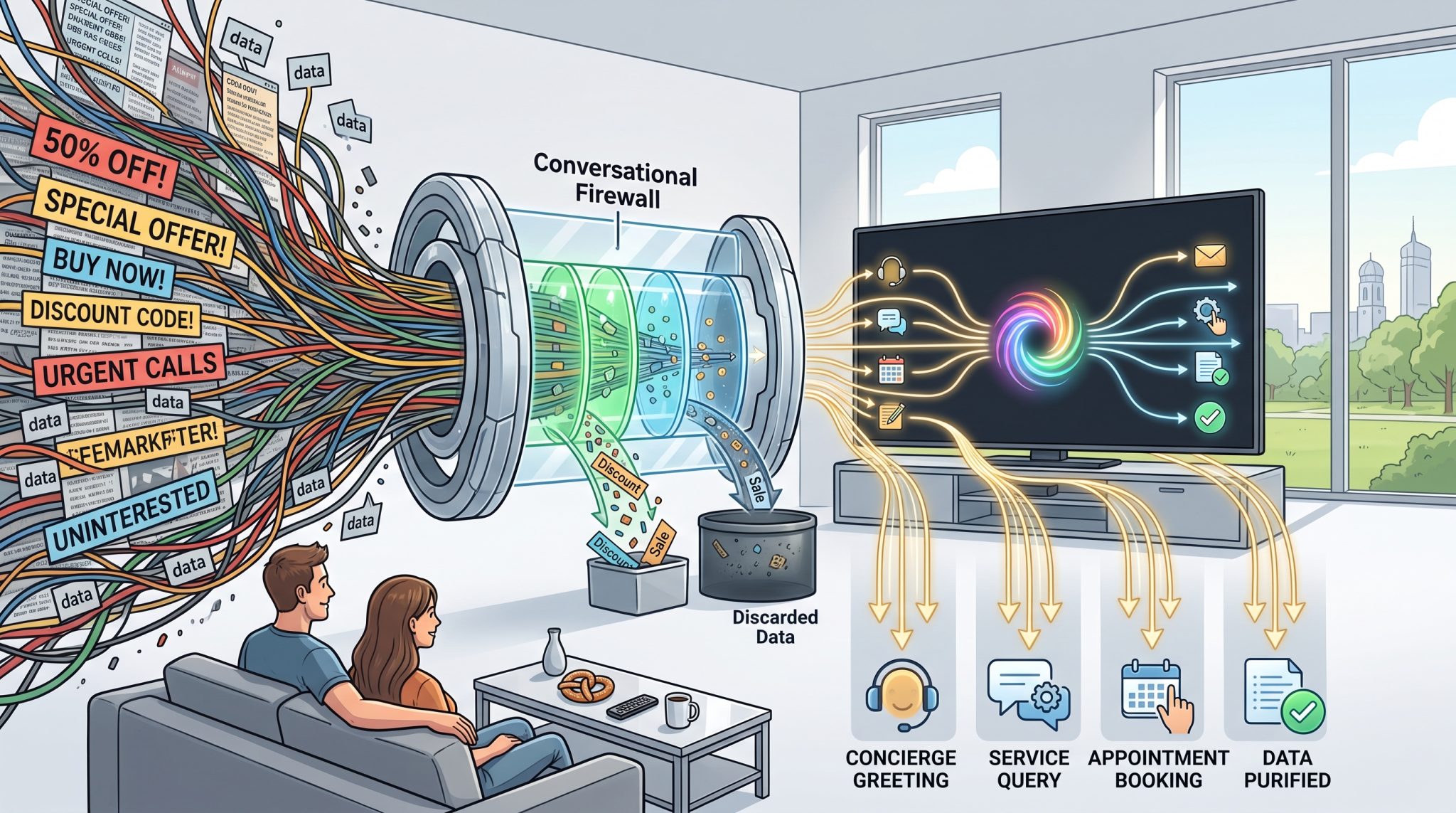
A major European healthcare enterprise jeopardized a critical outbound AI pilot by overloading the voicebot with aggressive, text-heavy marketing scripts. I intervened to establish strict conversational guardrails, cutting proposed prompt lengths by over 40% and shifting the architecture from a bloated sales pitch to a frictionless, high-converting digital concierge.
1. Context & Challenge
- Baseline: A leading European healthcare provider was piloting a proactive outbound AI assistant to schedule advisory appointments with hard-to-reach leads.
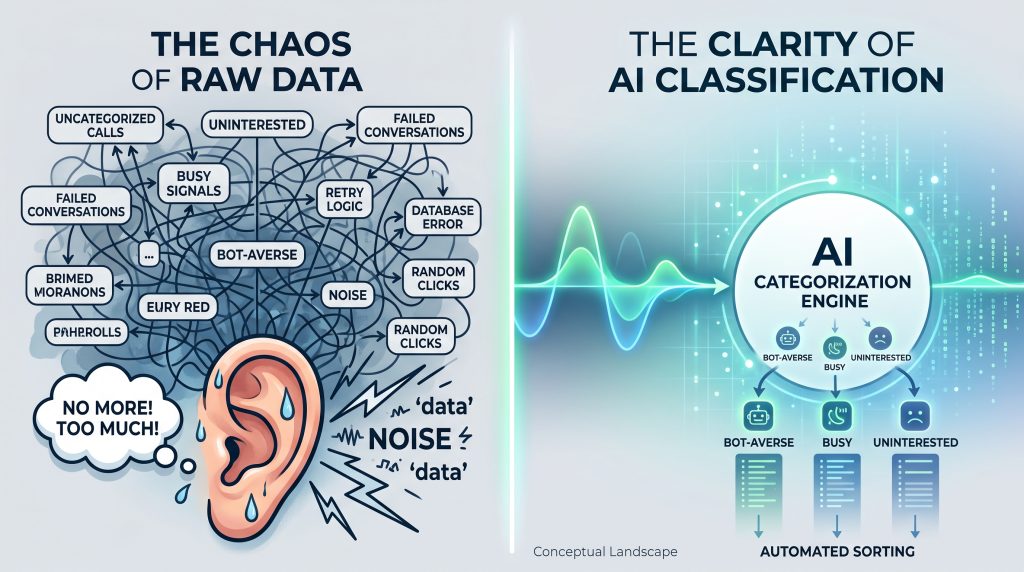
- The Bottleneck: As the pilot approached, internal marketing and sales teams attempted to overwrite the optimized conversational flows. They proposed replacing neutral, process-driven prompts with aggressive, text-heavy marketing copy—introducing complex product pitches, simulated empathy fillers, and lengthy value propositions that ballooned prompt lengths by an average of 42%.
- The Stakes: A high risk of catastrophic cognitive overload. In a voice channel, users have a 2-to-3-second attention span. Long monologues lead to immediate call abandonment. Worse, introducing marketing jargon provokes unpredictable user questions („intent provocation“) that shatter the boundaries of the natural language understanding (NLU) model, threatening to completely derail a highly visible enterprise pilot.
2. My Role & Strategic Approach
- Involvement: As the AI UX Lead, I stepped in to mediate the critical „Push vs. Pull“ conflict, defending the technical and psychological limits of voice design against legacy corporate marketing standards.
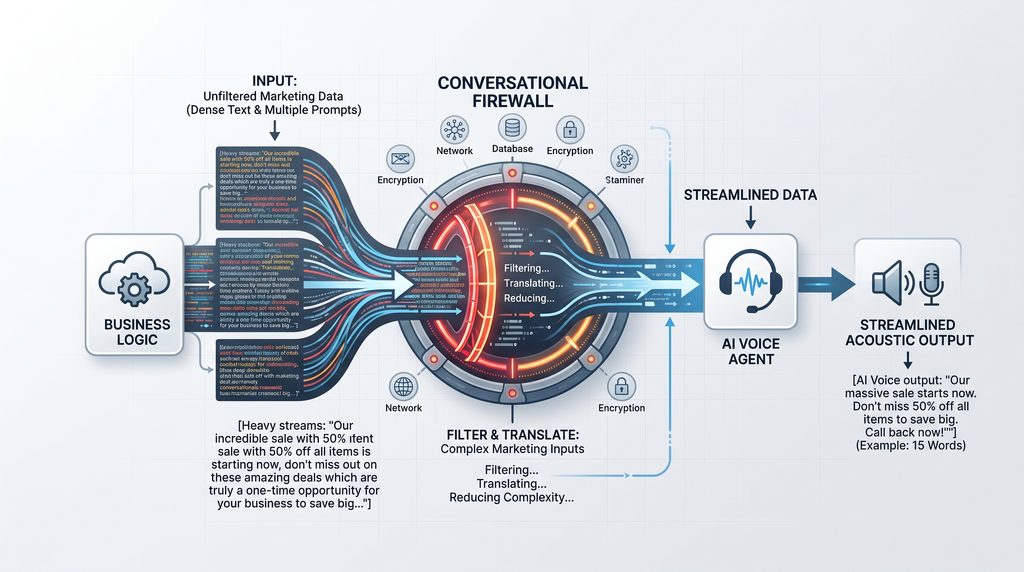
- The Core Insight: In text, length can build a narrative; in voice AI, brevity is the only true form of empathy. I realized that simulating human warmth through conversational fillers („I completely understand how you feel…“) actually destroys user trust in a machine. We needed a „Conversational Firewall“ to ruthlessly protect the user’s cognitive bandwidth and keep the AI strictly focused on frictionless task completion.
3. Solution Architecture & Execution
- Intervention 1: I audited the proposed scripts and vetoed the bloated marketing copy. I enforced a strict 15-20 word limit per turn, stripping out all „social fillers“ and feature pitching to ensure the AI maintained a crisp, organizational tone.
- Intervention 2: To manage user resistance without triggering complex arguments, I designed a defensive conversational routing matrix. If a user claimed they had „no time,“ the AI was programmed to acknowledge the objection in a single sentence and immediately pivot to two concrete, closed-ended callback options (e.g., „Tuesday at 10 AM or Thursday at 2 PM?“).
- Intervention 3: I codified these rules into a standardized „Voice AI Design Guide“ for the enterprise. This included strict Do/Don’t checklists—mandating one-sentence legitimizations, forbidding multi-layered alternative questions, and banning deep product comparisons within the AI’s scope.
4. Quantifiable Impact & Transformation
- Blocked a proposed 42% increase in prompt length, maintaining optimal conversational latency and preventing systemic cognitive overload for end-users.
- Protected the core NLU architecture from fatal „intent provocation,“ ensuring the bot stayed within its trained parameters and successfully completed the critical 600-call pilot phase.
- Eliminated the „uncanny valley“ effect by removing simulated emotional responses, directly improving user patience and intent recognition accuracy.
- Qualitative Shift: The intervention fundamentally shifted the enterprise mindset. Stakeholders stopped treating the AI as an automated telemarketer and embraced it as a highly efficient, neutral digital concierge, paving the way for scalable, user-centric automation.
5. Key Takeaways
- Brevity is the Ultimate Empathy: Users do not want a machine to pretend to care about their day; they want it to respect their time. Strip the fluff and focus purely on resolution.
- Protect the Context Window: Marketing copy provokes complex human responses. Strict conversational boundaries are a technical necessity to prevent your AI from falling into infinite error loops.

Du muss angemeldet sein, um einen Kommentar zu veröffentlichen.